
What Stage Size Do You Need for Your Next Event in Park City
A stage can make a room feel polished, intentional, and easy to follow. The wrong stage size can do the opposite. Too small, and presenters feel crowded. Too large, and the stage steals space from tables, guests, dance floors, or service paths.
That balance matters even more in Park City, where many events happen inside smaller hotels, restaurants, and historic venues with tighter load-in routes and unique room shapes. Our brand new executive stage was built for exactly that kind of setting. It comes in 4' x 4' increments, making it easier to get into venues and configure for the room instead of forcing the room to fit the stage.
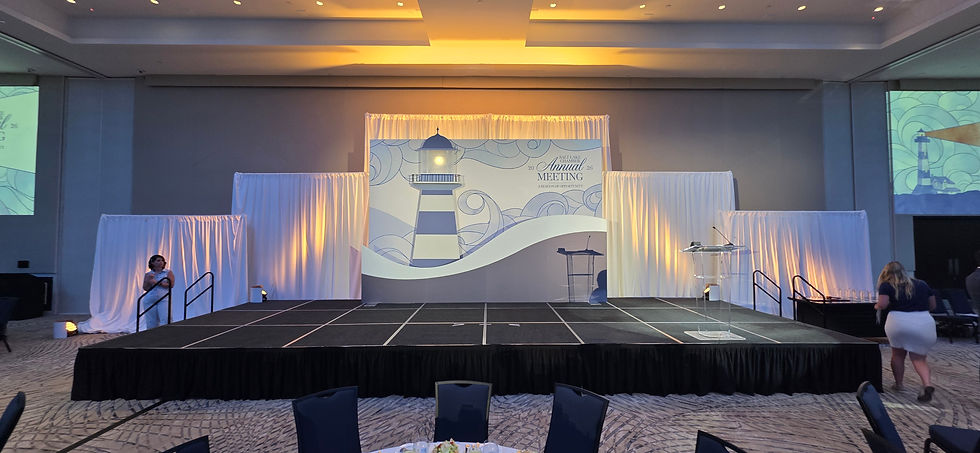
A modular stage gives you more options in smaller venues
Our executive stage system includes 12 total panels, which allows for several layouts depending on your event, room size, and program. Since the stage is modular, it can be built in different footprints and heights.
Two common configurations are:
Common stage size | Best suited for |
32' W x 12' D x 24" H | Larger programs, bands, awards, galas, and events where visibility matters |
24' W x 16' D x 16" H | Luncheons, panels and rooms with lower ceilings or tighter space |
12' W x 8' D x 16" H | DJs, smaller shows, single presenters |
If you are searching for a large executive stage rental in Utah, the biggest advantage of this system is flexibility. A wide, shallow setup can work well along one wall of a ballroom. A deeper setup can help when you need soft seating, musicians, product displays, or multiple presenters on stage at the same time.
The height matters too. A 16" stage feels natural in intimate rooms and works well when guests are seated close to the stage. A 24" stage gives better sightlines in larger rooms, especially when guests are seated at rounds or when dinner service is happening during the program.
Start with what will happen on stage
Before choosing a stage size, think through the actual moments in the event. A podium alone needs far less space than a panel discussion, award presentation, or live band.
For a luncheon or gala, start with these questions:
Will there be a podium on stage?
Will there be a panel with soft seating, barstools, or multiple presenters?
How many people need to be on stage at one time?
Will awards be presented with several people standing together for photos?
Will a band, solo musician, or DJ perform at any point?
Will anyone need to walk across the stage during the program?
Will the stage need stairs, railings, or an accessible route?
Will decor, florals, sponsor signage, or scenic pieces also sit on stage?
A simple podium presentation may only need a clean, compact footprint. A panel with four speakers, a moderator, side tables, and plants needs more depth. An awards program often needs extra width so recipients, presenters, and photographers have space to move without feeling crowded.
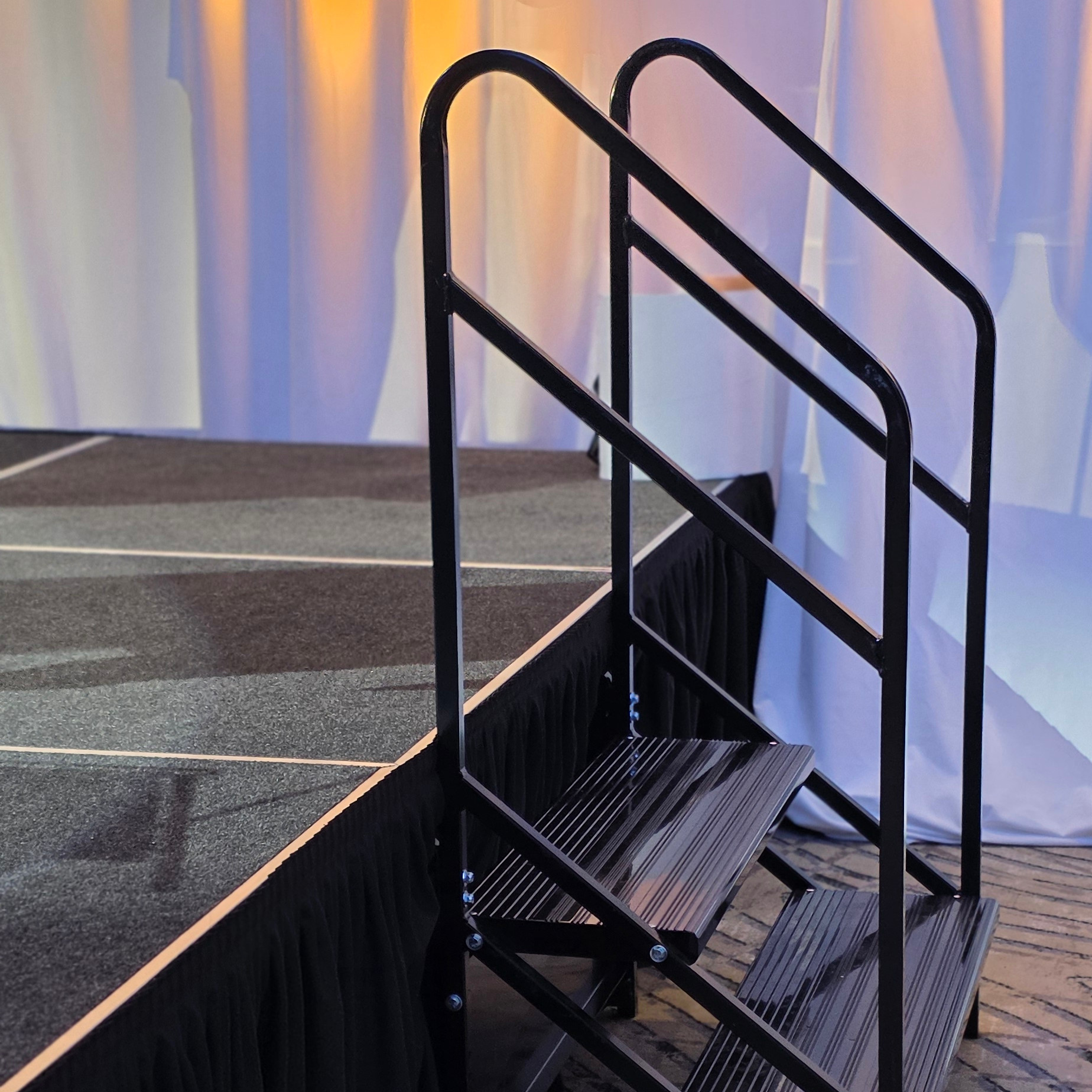
Match the stage to the event type
Different events use stage space in different ways. A gala stage is not built the same way as a runway, and a DJ setup does not need the same depth as a seated panel.
For galas and luncheons
Plan for sightlines first. Guests seated at round tables need to see the podium or presenters over centerpieces, servers, and other guests. If the program includes awards, add enough width for group photos and transitions.
A 24" height can make a big difference in a packed dinner room, while a 16" height may feel more connected for a smaller luncheon.
For bands, musicians, and concerts
Bands need depth. Even a small group may need room for microphones, monitors, instruments, cables, and safe movement. Ask how many performers will be on stage, what instruments they are bringing, and whether they need drum risers, music stands, or backline equipment.
This is where a larger footprint often pays off. The stage looks better, sounds better, and feels safer for the performers.
For DJs and receptions
A DJ may not need a huge stage, but the setup should still feel intentional. Leave room for the DJ table, speakers, lighting, and cable paths. If the DJ will also emcee, place them where they can see the room and connect easily with the event team.
For fashion show runways
A runway is all about shape and flow. The modular system can be configured for a fashion show runway, creating a long walk that brings the presentation closer to the audience. The key questions are where models enter and exit, how guests are seated, and whether photo or video teams need a clear front-facing angle.
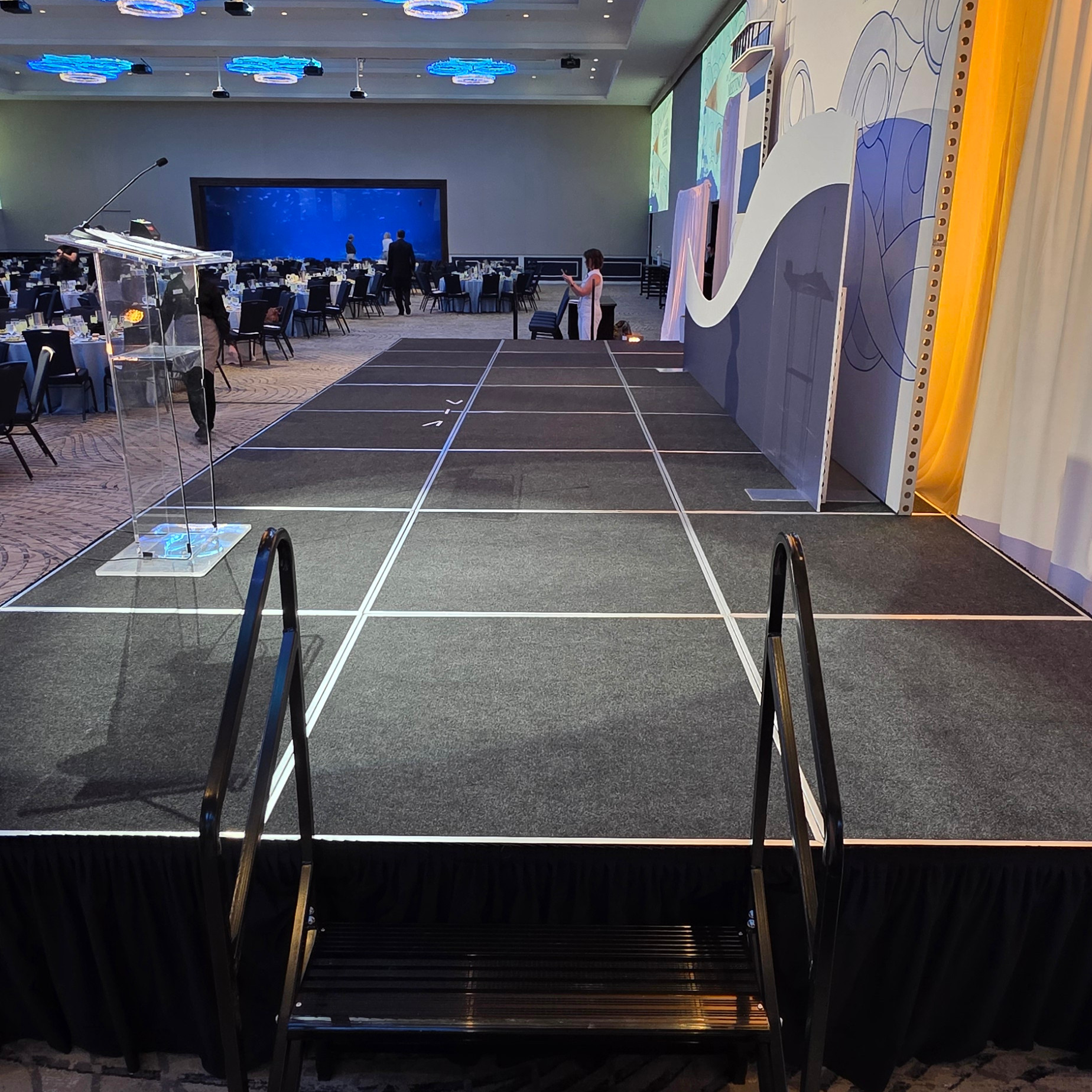
Ask the right questions before you book
A stage is part of the full event environment. For corporate meetings, concerts, galas, luncheon, dj, band, and ceremony-style events, the best stage plan usually comes from asking practical questions early.
For presentations or meetings:
How many presenters will speak?
Will slides or video be shown?
Does the presenter need confidence monitors?
Will the session be recorded or streamed?
Will the room need microphones for audience questions?
For awards ceremonies:
How many honorees come up at once?
Will there be photo moments on stage?
Will trophies, plaques, or gifts be staged nearby?
Does the stage need a clear entrance and exit path?
For live entertainment:
How many performers are included?
What equipment will be on stage?
Are there any heavy items, such as drums or keyboards?
Will performers need stage monitors or special lighting?
For fashion shows or product reveals:
Where does the talent or featured item enter?
How long should the runway be?
Where will photographers stand?
Does the first row need extra clearance?
Will lighting need to change during the show?
For restaurant or hotel venues in Park City:
How wide are the doors, hallways, and elevators?
Is there a loading dock or street-level access?
What time can the stage be loaded in?
Are there noise limits or quiet hours?
How much guest seating must be preserved?
Build the stage and AV plan together
At The Aquarium, projectors, audio, microphones, and accent lighting are fully built in for events. That gives planners a strong starting point, especially for programs that need clean sound and a polished visual setup.
As a full production company, we can also help with additional AV needs such as:
Technician support
Stage lighting
Live streaming or recording
Draping
Extra microphones
Music and DJ support
Lighting for dinner, filming, or photography
Stage lighting is highly recommended for dinners, awards, and recorded programs. It helps faces read clearly from the audience and on camera. Draping can also help define the stage area, hide back-of-house views, and make the setup feel finished.

The right stage size feels natural in the room
The best stage does not feel oversized or squeezed in. It supports the program, fits the venue, and gives presenters, performers, and guests a better experience.
For Park City hotels, restaurants, and historic venues, a modular executive stage is a smart fit because it can be adapted to the room. Start with the number of people on stage, the type of program, the AV needs, and the venue access. From there, the right size becomes much easier to choose.


Comments